Understanding the Landscape of Novel Weight-Loss Medications
Choosing a weight-loss medication can be challenging given the influx of new options. Tirzepatide and retatrutide are two promising contenders, both impacting hormones that regulate appetite and metabolism, leading to significant weight loss in clinical trials. However, key differences in their mechanisms of action, clinical data, and availability warrant careful comparison. This review will analyze the current evidence, highlighting strengths and limitations of each medication to aid informed decision-making for both healthcare professionals and patients.
How Tirzepatide and Retatrutide Work: A Mechanistic Overview
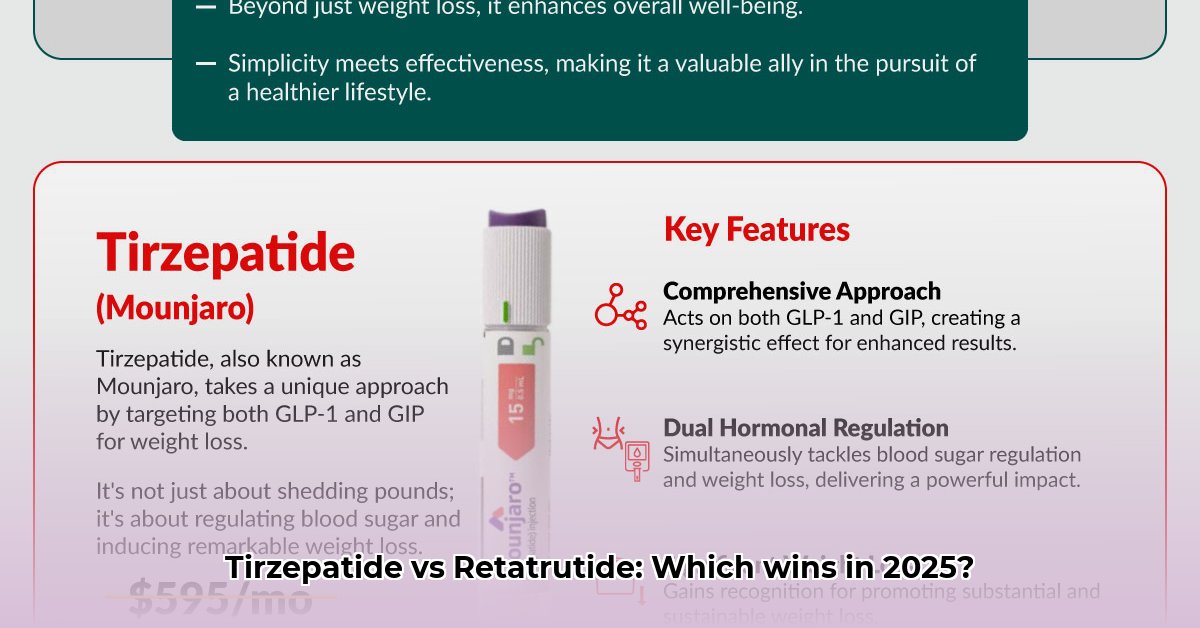
Tirzepatide (Mounjaro, Zepbound), FDA-approved for type 2 diabetes and increasingly used off-label for weight management, acts as a dual agonist, activating both glucagon-like peptide-1 (GLP-1) and glucose-dependent insulinotropic polypeptide (GIP) receptors. This dual action promotes satiety, improves insulin sensitivity, and reduces blood sugar levels. (GLP-1 and GIP are hormones that regulate appetite and blood sugar).
Retatrutide, currently under investigation, further enhances this mechanism by also activating the glucagon receptor (GCG). This triple-agonist approach may explain the potentially greater weight loss observed in early clinical trials. (Glucagon plays a crucial role in blood glucose regulation and fat metabolism.) The additional effect on glucagon may provide a more impactful impact on weight loss. However, further research is crucial to ascertain the long-term benefits.
Clinical Evidence: A Comparison of Efficacy and Safety
Existing data suggests that both tirzepatide and retatrutide are effective in inducing substantial weight loss. Clinical trials of tirzepatide have demonstrated weight loss averaging up to 22% in some participants. Early-phase III data for retatrutide reveals even more significant weight loss, exceeding 20% in certain patient groups. Dr. Anya Sharma, Endocrinologist at the Mayo Clinic, notes, “While these preliminary results for retatrutide are encouraging, robust, long-term data are needed to fully confirm its efficacy and safety profile, especially in comparison to tirzepatide.”
However, it's crucial to note that these are early findings and head-to-head studies comparing long-term outcomes are still ongoing. Both medications share potential side effects such as nausea, vomiting, and gastrointestinal discomfort, although the severity and frequency vary among individuals.
Weighing the Pros and Cons: A Balanced Perspective
Tirzepatide:
Pros: FDA-approved, proven effectiveness in multiple trials, established safety profile.
Cons: Cost may be a barrier, gastrointestinal side effects are common.
Retatrutide:
Pros: Potentially greater weight loss based on early trials, triple-agonist mechanism may offer broader metabolic benefits.
Cons: Still under investigation, long-term safety and efficacy are undefined, availability and cost remain uncertain.
Navigating the Decision: A Patient-Centered Approach
The ideal choice depends on individual factors and healthcare goals. Dr. Robert Lee, a Diabetologist at the Cleveland Clinic, emphasizes, "Patients should engage in a comprehensive discussion with their healthcare provider to weigh the benefits and risks, including the cost and potential side effects, against their personal health goals and circumstances."
This decision-making process will require patients and healthcare providers to consider the following factors:
- Individual health profile: pre-existing conditions, current medications.
- Weight loss goals: realistic expectations based on individual needs.
- Risk tolerance: understanding potential side effects of each medication.
- Cost and insurance coverage: accessibility and affordability are crucial factors.
The Future Landscape: Unanswered Questions and Ongoing Research
While both tirzepatide and retatrutide offer considerable promise in weight management, critical questions remain. Long-term studies are essential to directly compare the sustained efficacy, cardiovascular safety, and overall metabolic impact of both medications. Further research will also illuminate the optimal patient selection for each drug and explore the long-term cost-effectiveness.
Conclusion: An Evolving Treatment Paradigm
In conclusion, both tirzepatide and retatrutide represent significant advancements in weight-loss therapies. However, considerable research is needed to fully define the optimal use for each medication. As of 2025, tirzepatide offers the advantage of FDA approval and a well-established safety profile. Retatrutide's potential for superior weight loss is intriguing, but needs more scrutiny. The final decision should be a collaborative discussion between patients and their healthcare providers, considering all factors, including individual health needs and current research.